New Advisory Fuel Rates from June 2026: Who Benefits and by How Much
HMRC's quarterly advisory fuel rates jumped on 1 June 2026, with diesel company car rates seeing the biggest increases. Here's who they apply to and how they compare to the new 55p mileage rate.

Every three months, HMRC quietly updates a set of per-mile fuel rates that most self-employed drivers have never heard of. They land on GOV.UK with no fanfare, no press release, and roughly zero public interest. For the majority of people tracking business mileage, they're irrelevant.
But if you drive a company car for business, or you're weighing up whether the flat mileage rate or actual costs makes more sense for your tax return, the June 2026 advisory fuel rates are worth a few minutes of your time. They moved more than usual, and the reason tells you something about where fuel costs are heading.
What advisory fuel rates actually are
Advisory fuel rates (AFRs) are the per-mile amounts at which employers can reimburse company car drivers for business fuel without creating a tax liability. The employee gets paid back for the petrol or diesel they put in. The employer deducts it. HMRC doesn't treat it as a benefit in kind. Everyone's happy.
They vary by engine size and fuel type because a 1.0-litre Corsa burns a lot less fuel per mile than a 3.0-litre BMW. HMRC sets the rates based on actual pump prices from the previous quarter, averaged against manufacturer MPG figures for each engine band. The result is a rate that roughly reflects what the fuel actually cost.
They are not the same as the 55p Approved Mileage Allowance Payment (AMAP) rate that self-employed drivers and employees using their own cars claim. That distinction matters, and confusing the two is surprisingly common.
The June 2026 rates
These took effect on 1 June 2026 and run until 31 August.
| Fuel type | Engine size | Rate per mile |
|---|---|---|
| Petrol | 1400cc or less | 15p |
| Petrol | 1401cc to 2000cc | 18p |
| Petrol | Over 2000cc | 26p |
| Diesel | 1600cc or less | 13p |
| Diesel | 1601cc to 2000cc | 16p |
| Diesel | Over 2000cc | 21p |
| LPG | 1400cc or less | 11p |
| LPG | 1401cc to 2000cc | 13p |
| LPG | Over 2000cc | 20p |
| Electric | All | 7p |
The PetrolPrices AFR breakdown has the full comparison with previous quarters. Gateway2Lease covers the fleet management angle.
Why these rates jumped
The short version: oil prices. The Iran conflict pushed crude above $100 a barrel in March 2026, and the effects rippled through to UK forecourts within weeks. Diesel hit 184p per litre. Petrol wasn't far behind. I wrote about it in more detail in the fuel prices post back in April.
Advisory fuel rates are backward-looking. They reflect actual pump prices from Q1 2026, which were the highest in three years. So these June rates are catching up to a spike that drivers already felt in their wallets months ago. If prices ease over the summer (and that's a big if, given the geopolitical picture), the September rates should drop back.
Diesel saw the largest percentage increase across all engine bands. That tracks with the disproportionate hit diesel took at the pumps. If you run a diesel company car and your employer was still reimbursing at the old rates, you've been out of pocket since March.
Who uses which rate
This is where the confusion lives. There are two completely separate systems for reimbursing business miles in the UK, and they apply to different people.
Advisory fuel rates (the ones in the table above) apply to company car drivers. The company owns or leases the car. It pays the insurance, the road tax, the servicing, the depreciation. The driver just buys the fuel. So the reimbursement rate only needs to cover fuel, and it varies by engine size because fuel consumption varies by engine size. A sensible system, as these things go.
The AMAP rate (currently 55p per mile for the first 10,000 miles, 25p after) applies to everyone else. Self-employed workers using their own car. Employees using their own car for business. Volunteers. The rate is flat regardless of engine size because it covers everything: fuel, insurance, depreciation, tyres, servicing, road tax. The lot. You hand over your mileage log, multiply by 55p, and that's your claim.
An employee can fall into either camp depending on the journey. Use the company car: advisory fuel rate. Use your own car for a business trip because the company car was in the garage: AMAP rate. Same person, different car, different rate.
55p versus 13p to 26p
Looking at the numbers side by side can be misleading. A self-employed plumber gets 55p per mile. A company car driver with a mid-range diesel gets 16p. That looks like the plumber is getting a much better deal. They're not, really. They're covering fundamentally different costs.
The plumber's 55p has to pay for the fuel, yes, but also the monthly finance payment, the insurance, the MOT, the tyres, the brake pads, the depreciation that knocks thousands off the resale value each year. The company car driver's 16p only covers the diesel in the tank. Everything else is the employer's problem.
Whether the 55p rate is generous or tight depends entirely on what you drive and how far. For a small petrol car doing 15,000 business miles a year, the maths works out reasonably well. For a large diesel van, especially at current fuel prices, the 55p rate barely breaks even on running costs. I covered this properly in the fuel prices piece, including the worked examples.
The electric vehicle oddity
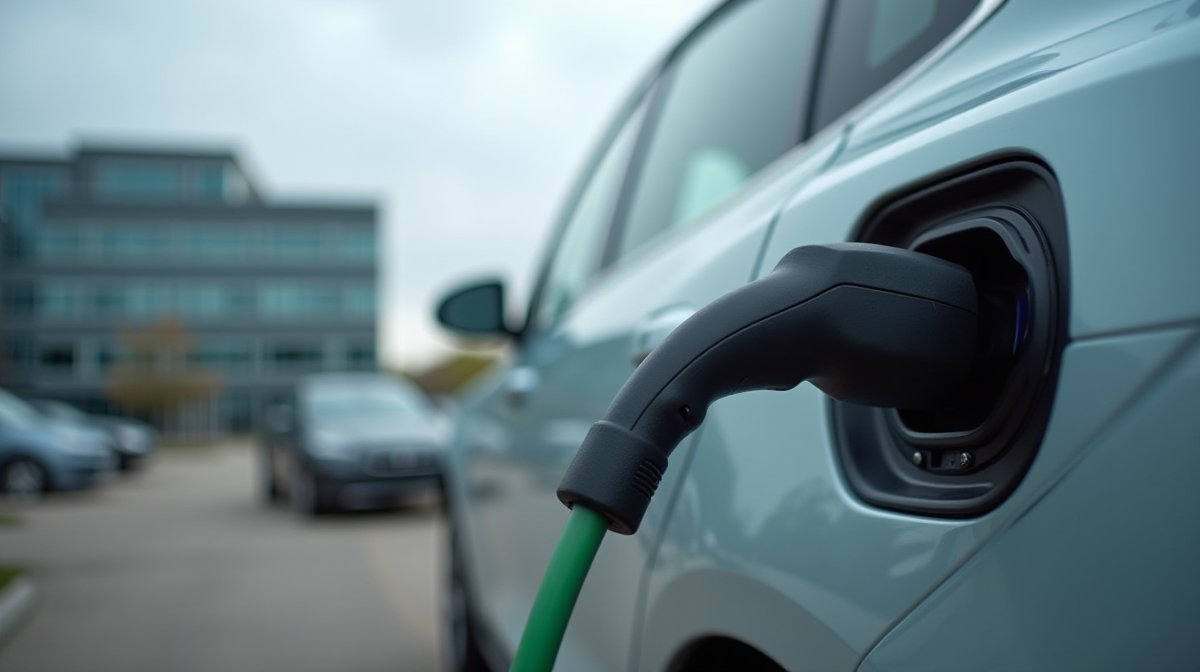
The advisory rate for electric company cars is 7p per mile, based on home charging costs. That number has been relatively stable because electricity prices, while not cheap, haven't been as volatile as petrol and diesel over the past year.
Here's what trips people up: the 7p rate is only for company car drivers charging at home and claiming back the electricity cost. If you drive your own electric car for business, you claim 55p per mile under the AMAP rate. Same as petrol. Same as diesel. HMRC doesn't distinguish by fuel type for AMAP.
That means a self-employed EV driver claiming 55p per mile, where the actual electricity cost is around 5p to 8p per mile, is doing quite well out of the arrangement. The remaining 47p to 50p covers insurance, depreciation and the rest, but on a car with lower servicing costs and potentially slower depreciation, the margin is comfortable. It's one of the few situations where the AMAP rate is clearly generous rather than tight.
For company EV drivers, the 7p rate is what it is. If your employer has workplace chargers, the reimbursement picture changes again, because the electricity isn't coming out of your pocket. HMRC's guidance on workplace charging as a benefit in kind is a whole separate topic, and one they keep updating.
What to do with this
If you're self-employed, using your own car, and claiming the AMAP rate: nothing. Advisory fuel rates don't affect you. Your rate is 55p, set by the Finance Act, and it doesn't change with the quarterly fuel price cycle. Carry on.
If you drive a company car and your employer reimburses fuel: check that they've updated to the June rates. Some smaller employers don't bother updating quarterly, and you end up reimbursed at last quarter's rate while paying this quarter's fuel prices. A polite email pointing to the GOV.UK page usually sorts it.
If you're an employee using your own car and your employer reimburses less than 55p per mile (or nothing at all), you can claim Mileage Allowance Relief (MAR) on your self-assessment for the difference. That's a separate claim from advisory fuel rates and applies per mile regardless of engine size.
And if you're trying to decide between claiming the simplified mileage rate and tracking actual vehicle costs for your self-assessment, the advisory rates give you a useful data point. They tell you roughly what HMRC thinks fuel alone costs per mile for your engine size. If your total actual running costs, including everything, are well above 55p per mile, actual costs might save you more. For most people driving average distances in average cars, the 55p rate is simpler and comes out about the same.

All Premium features free until 5th April 2027 (end of 26/27 tax year). KeptMiles tracks every business journey automatically so you never lose one — and each journey is the hook you attach your ULEZ, parking and toll receipts to, so nothing slips through at tax time.