Electric Vehicle Mileage Claims: Why 45p Per Mile is a Gift for EV Drivers
HMRC doesn't care what powers your car. Petrol, diesel, electric: same rate. That makes the mileage allowance absurdly generous if you drive an EV.
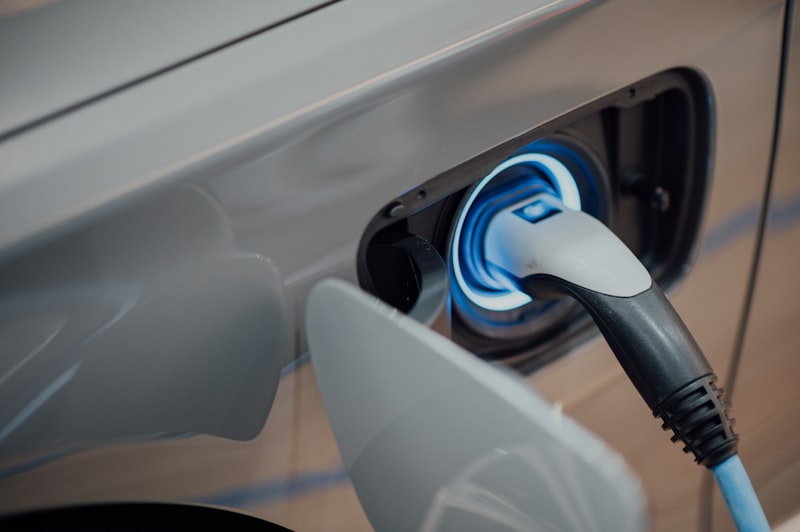
Somewhere in HMRC's rate-setting process, someone decided that the mileage allowance should not vary by fuel type. The same 45p per mile applies whether you're burning premium diesel at 18p per mile or running on home-charged electricity at 5p per mile.
For EV drivers who are self-employed, this is probably the single best tax advantage available right now. The numbers are almost comical once you run them.
The rate: 45p per mile, regardless of fuel type
HMRC's Approved Mileage Allowance Payments are:
- 45p per mile for the first 10,000 business miles
- 25p per mile after that
These rates apply to cars and vans. There is no distinction between petrol, diesel, hybrid, plug-in hybrid, or fully electric vehicles. HMRC confirmed this explicitly: the guidance simply says "cars" without qualification. A Tesla Model 3 gets the same rate as a Ford Transit diesel.
For petrol drivers, 45p per mile roughly covers the actual cost of running a mid-range car. The AA estimates total running costs (fuel, insurance, depreciation, servicing, tax) at 50–70p per mile depending on the vehicle. So the 45p rate slightly undercompensates petrol drivers, but it's close enough that the simplicity makes it worthwhile.
For EV drivers, the picture is entirely different.
What it actually costs to run an EV per mile
Electricity is dramatically cheaper than petrol per mile driven. The exact cost depends on how and where you charge, but here are realistic 2026 figures:
Home charging (the cheapest option)
Most EV owners do the bulk of their charging at home, overnight. The average UK electricity tariff in early 2026 is around 24p per kWh. A typical EV uses 3–4 miles per kWh (depending on the car, driving style, and weather).
At 3.5 miles per kWh on a 24p tariff: 6.9p per mile.
If you're on an EV-specific tariff (several energy companies offer cheap overnight rates for EV charging), you might pay 7–10p per kWh overnight. That brings the cost down to 2–3p per mile.
Public charging
Public rapid chargers are more expensive. Prices vary wildly, from 35p per kWh at some networks to 80p+ per kWh at motorway services. At 50p per kWh and 3.5 miles per kWh, that's roughly 14p per mile.
Even at the most expensive public chargers, you're still well under 45p per mile.
Blended average
Most EV drivers do 80% or more of their charging at home. A reasonable blended average for a typical self-employed EV driver in 2026 is 5–7p per mile for energy costs.
Compare that to a petrol car doing 40mpg at £1.45 per litre: roughly 16p per mile just for fuel.
The worked comparison: EV vs petrol, same miles
Take two self-employed electricians. Both do 10,000 business miles in the 2025/26 tax year. One drives a Hyundai Kona Electric. The other drives a Vauxhall Astra petrol.
Both claim the same mileage allowance
10,000 miles × 45p = £4,500 each.
Identical. HMRC doesn't distinguish between them.
But their actual costs are very different
| Hyundai Kona Electric | Vauxhall Astra (petrol) | |
|---|---|---|
| Energy/fuel (10,000 mi) | £600 (6p/mi home charging) | £1,600 (16p/mi petrol) |
| Insurance | £700 | £650 |
| Road tax | £0 (EVs exempt until April 2025, then £190 from 2025) | £190 |
| Servicing | £200 | £400 |
| Tyres | £250 | £200 |
| MOT | £55 | £55 |
| Total running cost | £1,805 | £3,095 |
The EV driver claims £4,500 and spends £1,805. Net benefit: £2,695 tax-free.
The petrol driver claims £4,500 and spends £3,095. Net benefit: £1,405 tax-free.
The EV driver comes out nearly £1,300 better off per year on the same mileage. And that's before you factor in the lower depreciation many EVs now enjoy, the lack of congestion charge in London, and cheaper parking in some councils.
At 15,000 business miles, the EV driver claims £5,750 (10,000 × 45p + 5,000 × 25p). Their energy cost is about £900. Net benefit: £4,850. The petrol driver claims the same £5,750 but spends £2,400 on fuel alone. The gap widens with more miles.
Home charging vs public charging: does it matter for the claim?
No. Where you charge has no effect on what you claim. The 45p rate is the same whether you charge at home, at a public charger, at a client's house, or at a free supermarket charger.
Where it does matter is your net benefit. If you charge mostly at home on a cheap overnight tariff, your actual costs are lower and the gap between your claim and your costs is wider. If you rely heavily on expensive public rapid chargers, your costs are higher and the gap narrows, though it's still substantial.
One thing to note: you cannot separately claim the cost of your home electricity for charging on top of the mileage allowance. The 45p rate already covers it. If you charge at home, that electricity cost comes out of the 45p; you don't add it as a separate business expense. The same applies to petrol drivers and their fuel receipts.
Can you claim charging costs instead of mileage?
Yes, but you almost certainly shouldn't.
HMRC gives you a choice: simplified mileage (the 45p rate) or actual costs. With actual costs, you'd claim your real electricity expenditure, insurance, tax, and so on, multiplied by your business-use percentage.
For an EV, actual costs will almost always produce a lower claim than simplified mileage. Think about it: your actual costs are maybe £1,800 a year. Even at 80% business use, that's £1,440. Simplified mileage on 10,000 business miles is £4,500. It's not close.
The full comparison between the two methods is covered in the guide to simplified mileage vs actual costs. For EVs, the conclusion is unambiguous: use simplified.
There's also the lock-in rule to consider. Once you claim actual costs for a vehicle, you can't switch back to simplified mileage for that vehicle. Ever. Starting with simplified keeps your options open. Starting with actual costs for an EV would be locking yourself into the worse option permanently.
What about company car drivers?
This is a different situation entirely, but worth a brief mention because it often comes up in the same conversation.
If you drive a company-owned electric vehicle, you don't use the 45p mileage rate. Company car drivers are subject to Benefit in Kind (BIK) taxation. The BIK rate for fully electric company cars is currently 2% of the list price (for the 2025/26 tax year), rising to 3% in 2026/27 and 4% in 2027/28. These are extremely low rates compared to petrol or diesel company cars, which face BIK rates of 20–37% depending on emissions.
If you're a company director choosing between a company car and a personal car with mileage claims, the comparison depends on the car's list price, your mileage, your tax rate, and the company's tax position. That's accountant territory. But for sole traders and the self-employed with their own vehicle, simplified mileage at 45p is the clear winner.
For business mileage in a company car, employers should reimburse at the advisory fuel rate, which is currently 7p per mile for electric vehicles. Much less than the 45p AMAP rate: another reason personal car ownership plus mileage claims tends to work better for the self-employed.
Plug-in hybrids: same rate applies
Plug-in hybrid electric vehicles (PHEVs) get the same 45p per mile as everything else. HMRC does not distinguish between a fully electric car and a plug-in hybrid. Both fall under "cars" in the AMAP guidance.
A PHEV's per-mile cost depends heavily on how you use it. If you keep the battery topped up and do most short trips on electric power, your fuel costs could be as low as 8–10p per mile. If you mostly run on the petrol engine (common with PHEVs that aren't regularly charged), costs will be closer to a conventional car.
Either way, you claim 45p. The better your electric-to-petrol ratio, the wider the gap between what you claim and what you spend.
Will HMRC change the rate for EVs?
The honest answer: nobody knows. The 45p rate has been frozen since 2011. In that time, the argument for increasing it (fuel costs have risen) has been matched by the argument for decreasing it (EVs make it too generous). It's possible HMRC will eventually introduce a separate, lower rate for electric vehicles. But there's been no indication this is imminent.
What has changed is the advisory fuel rate for company cars, which already has a separate (lower) EV rate of 7p per mile. Some commentators see this as a signal that AMAP rates could eventually be split by fuel type too. But for now, the 45p rate applies to all cars, and there's nothing in the current tax year guidance to suggest that will change for 2026/27. For the latest on the rates, see the HMRC mileage rates 2026/27 guide.
The practical advice: claim it while it lasts. If the rate eventually drops for EVs, you'll still have banked all the years at 45p. If it doesn't change, even better.
What records do you need?
Exactly the same as any other vehicle claiming simplified mileage:
- Date of each business journey
- Start and end location
- Purpose of the journey
- Distance in miles
No electricity receipts. No charging records. No home energy bills. The simplified mileage rate covers everything: you just need to prove the business miles you drove. For more detail on record-keeping, see the guide: do I need to keep a mileage log?
The bottom line
If you're self-employed and you drive an electric vehicle for work, the mileage allowance is one of the best deals in the UK tax system right now. You claim 45p for every business mile. Your actual cost is a fraction of that. The difference is yours, tax-free.
The only thing you need to do is track those miles. Every business mile you don't record is money you can't claim. And at 45p a mile with running costs of 5–7p, every forgotten mile is roughly 40p wasted.
Track every mile. Keep the difference.
KeptMiles auto-detects your journeys, records every mile, handles the 45p/25p threshold automatically, and exports HMRC-ready reports. No manual entry. No tapping start and stop. Just drive.

All Premium features free until 5th April 2027 (end of 26/27 tax year). Start tracking your EV miles now.